Hat Glossary
Abaca: (Musa textilis) A plant of the banana family, grown in the Philippines, that produces the fibre used in the production of sisal and sinamay.
Ammana: Large wound turban worn by Muslims.
Bandeau: A headband of material, structured or unstructured.
Baseball cap: Cloth cap with a long peak or brim. Originally worn by baseball players, now worn as a general leisure hat.
Beaver: An expensive felt hat made from felted beaver fur.
Bearskin: (Busby) A large, furry, high crowned helmet, which is part of the ceremonial uniform worn by the British Brigade of Guards.
Beret: Soft brimless hat made from felt, felted jersey or fabric.
Best stuff: 19th century term for rabbit fur, including the backs and the best parts of the sides mixed together for felting.
Bicorne: Hat of the late 18th and early 19th century: wide brims were folded up to form two points.
Biretta: Square brimless hat worn by clergy, the crown has three or four projections.
Block: A wooden form used as a mould to shape a brim or crown by hand.
Blocking: Is the term used to describe the action of moulding a hat shape.
Boater: Flat-topped hat with small flat brim. Traditionally, made of stiffened straw braid.
Bonnet rouge: Red cap worn during the French Revolution, as a symbol of liberty.
Bowler: Oval hat with round, rigid crown and a curved brim. Named after Thomas and William Bowler, London hat-makers, who produced it for James Lock & Co. In the USA it is known as a Derby and was very popular at the turn of the last century, and has even been called“The Hat that Won the West!”
Breton: Hat with domed crown and brim turned-up all around.
Breton Cap: Fisherman’s style cap.
Bridal veil: White or ivory veil, worn during wedding ceremony.
Brim: Projecting edge of a hat.
Buckram: Stiff netting used to make hats. May be blocked or sewn. Once used by milliners to make blocks for limited use.
Bumping: Term used for the process of final felting of a hood, further compressing and felting of hoods done in a bumping machine.
Calotte: A close-fitting skull cap as worn by the Roman Catholic Clergy.
Canadian Mountie’s Hat: Official head-dress of the Royal Canadian Mounted Police. Flat brimmed felt with the crown ‘pinched’ to form four indentations.
Canotier: Boater (French).
Cap: A hat with a small brim or peak at the front.
Capeline: Roughly shaped crown and brim of felt or straw, to be blocked into hat shape.
Carroting: Preliminary treatment of wool or fur with acids, to curl the hairs before felting. Produces a reddish-yellow colour which is the origin of the name.
Catherinette: French term for milliners who are still unmarried at the age of twenty-five. Named after St Catherine the patron saint of milliners. The 25th of November is St Catherine’s Day.
Caul: Historical term for a net or close-fitting indoor head-dress, or the plain back part of the same.
Cavalier hat: A wide-brimmed, plumed hat worn by cavaliers in the 17th century: the right side of the brim was pinned up to the crown so that the wearer’s sword arm could move freely above the shoulder.
Chef’s hat or toque: White, starched bonnet with tall crown. French tradition states that a chef’s hat should have 100 pleats, to represent the number of different ways in which a great chef can prepare eggs.
Chira: Indian Turban
Cloche: Close-fitting women’s hat. Popular in the 1920s
Coalman’s hat: A short visor cap with a protective flap at the back, derived from a hat worn by English coal deliverers to protect their backs from dust.
Cockade: Ornamental rosette of ribbon or cloth, worn on a hat as a badge of office or as a decoration.
Cocked hat: An old-fashioned three-cornered hat.
Cocktail hat: A small, often frivolous, hat for women, usually worn forward on the head.
Coif: Head-cover worn by nuns as part of their habit, often with long veils.
Cone: Conically shaped hood of felt or straw used for blocking into small hat shapes or crowns.
Coolie hat: A shallow conical straw hat with a large brim to protect wearer from the sun.
Coronet: Small crown worn by members of nobility as a symbol of rank.
Cowboy hat: Hat with high crown and wide brim, originally worn by cow hands. Usually made of felt or leather (see also ten gallon).
Crin: Traditionally a fine mesh-like fabric woven from horsehair and used to trim hats. Nowadays made from nylon filaments. Also known as ‘Horsehair’.
Crown: The top part of a hat.
Crush hat: A collapsible opera hat.
Danbury Shakes: See Mercury Poisoning
Deer stalker: A hunting cap with visors at the front and back, and ear-flaps that can be tied up over the crown. Made famous by the fictional detective, Sherlock Holmes.
Derby: Another name for a Bowler hat.
Doff: The action of partially removing a hat by males, as a sign of respect.
Diadem: A jewelled headband.
Easter bonnet: Women’s hat, a new spring style to be worn at Easter.
English driving cap: Low-profile cap, originally only for men. Often with ear-flaps.
Esparterie: A flat sheet material made of esparto grass and cotton. Used for the making of blocks and as a stiffening in the construction of hats.
Feather head-dress: Ceremonial and symbolic head-cover worn by chiefs of North American Indian tribes.
Fedora: A brimmed soft felt hat with a tapered crown that is dented lengthways. It comes originally from the Austrian Tyrol and is named after FEDORA a play by the French dramatist Victorien Sardou which was shown in Paris in 1882.
Felt: Cloth made from wool, fur or hair, compacted (felted) by rolling and pressing, in the presence of heat and moisture.
Fez: Brimless, conical, flat-topped cap with a tassel attached at the top centre. Men’s head-covering, made of red felt, worn in Islamic cultures.
Fillet: A band for the hair.
Fish tail: Ribbon with a decorative v-shape cut at the end.
Forage cap: Military cap with a small brim. Can also be a cap, with or without a brim, of longitudinal cut, which folds flat when not being worn.
Fulling: Tumbling and pounding of cloth in hot water to induce felting.
Fur felt: Any hood or capeline of felt made from fur fibres.
Gainsborough Hat: A high crowned, big brimmed hat decorated with feathers and ribbons. Popular in the 1780s.
Garbo hat: Slouch hat (a soft, broad-brimmed hat).
Gaucho hat: A black felt hat with a wide flat brim and shallow flat-topped crown.
Gibus: Collapsible top hat [French, from the maker's name].
Glengarry: Highlander’s cap of thick-milled woollen cloth, generally rising to a point in front, with ribbons hanging down behind
Hat: Item of dress worn on the head, from a word of Saxon origin meaning hood.
Hatter: An artisan who makes and/or sells men’s hats
Helmet: A protective or ceremonial head-cover.
Hennin: A high conical hat with a veil attached at the top, worn by women during the 15th century.
Hijab: A covering for a Muslim woman’s head and face, sometimes reaching the ground, often accompanied by the niqab (face veil).
Homburg: A man’s hat, made of felt, with a narrow upturned brim, and a depression in the crown. First worn at Homburg, a town in western Germany Usually trimmed with a band and bow.
Hood: Cone or capeline of felt or straw for making hats.
Horsehair: Traditionally a fine mesh-like fabric woven from horsehair and used to trim hats. Nowadays made from nylon filaments. More generally known as Crinoline or ‘Crin’.
Jockey cap: Cloth cap with close-fitting 6-panel crown and wide brim at the front.
Juliet Cap: A round, close-fitting skullcap worn by women. The style dates back to the Renaissance.
Jute Hood: Cone, capeline or sheet materiel made of jute fibre.
Kalpak: A triangular Turkish or Balkan felt or sheepskin cap.
Kippa: Skull-cap worn by Jewish men. Also known as Yarmulke.
Koufiya: Islamic (Muslim) prayer cap. A soft fabric skull cap.
Leuring lathe: A block on a turntable. The hat is placed on the block and, as it turns, it is then polished or ‘leured’ with a plush or velveteen pad, to impart a shine to the felt fibres, particularly on the crown.
Liberty cap: Phrygian cap.
Mad Hatter: Famous character of Lewis Carroll’s “Alice in Wonderland” also see Mercury below.
Mercury Usage: Mercury Nitrate was used to soften the thicker and coarser fur (guard hair) from a rabbit or hare. This was to make the finished felt hood as soft and fine as possible, before it was made into a hat, for the obvious reason that it would be of a higher quality and price.
Mercury Poisoning: Mercury is acutely hazardous as a vapor and in the form of its water-soluble salts, which corrode membranes of the body. Chronic mercury poisoning, which occurs when small amounts of the metal or its fat-soluble salts, particularly methyl mercury, are repeatedly ingested over long periods of time, causes loss of memory, irreversible brain, liver, and kidney damage. paralysis, mental derangement and eventually death. Hence the term, “As mad as a Hatter”. In the United States it was referred to as the Danbury shakes, from the hat town of Danbury, Connecticut.
Mandel: A turban woven with silk and gold.
Milliner: Artisan who makes and/or sells ladies hats. The word ‘milliner’, a maker of women’s hats, was first recorded in 1529 when the term referred to the products for which Milan and the northern Italian regions were well known, i.e. ribbons, gloves and straws. The haberdashers who imported these highly popular straws were called ‘Millaners’ from which the word was eventually derived.
Millinery: The craft of making hats, especially women’s hats.
Mitre: A high, pointed headdress, cleft crosswise on top and with two ribbons hanging from the back. The right to wear the mitre belongs by law only to the pope, the cardinals, and the bishops. Others require a special papal privilege.
Mortarboard: Flat, square head-cover worn by professors and students for solemn academic occasions.
Nap: Short fibres extending above the surface of cloth, fabric or felt, creating a soft, downy effect such as on velvet.
Night cap: Men’s cap worn informally indoors from the 16th to the 19th century. The cap had a deep crown made of four segments, with the edge turned up to form a close brim.
Niqab: Face veil worn by Islamic women, together with the hijab (head-cover).
Panama: The name given to straw made from fibres of the Toquilla Palm (Carludovica Palmata), grown and woven in Ecuador.
Panama Hat: Straw hat made with Panama straw.
Paper panama: Cone or capeline made of Japanese Toyo paper, woven to imitate natural Panama can be 1×1 or 2×2 weave.
Parasisal/Parisisal: A two over two weave of sisal fibres, used to make cones and capelines. Available in 5 grades, depending on the fineness of the fibres, it is lightweight, resilient and takes dye well.
Peak: Visor.
Petasos: Ancient Greek sun hat with a wide floppy brim. Made of wool felt, leather or straw. The first known hat with a brim.
Phrygian cap: Conical cap with the top bent forward, named for an ancient people of Asia Minor. Worn as a symbol during the French Revolution, it is now also known as the ‘Cap of Liberty’.
Picture hat: A ladies hat with a very wide brim.
Pile: Nap.
Pileus or Pilos: A simple felt or leather skull cap worn in Ancient Greece.
Pillbox: A small brimless hat with a flat tip and cylindrical side. This hat became popular when Jackie Kennedy wore them. Clothes designer Halston reinvented the pillbox worn by Greta Garbo in the 1932 film ‘As You Desire Me’, especially for Mrs Kennedy. Pillboxes can be made in most types of fabric.
Pith helmet: Helmet of cork or pith (dried spongy tissue from the sola plant), covered with cloth. Also called a Sola Topee.
Planking: Rolling and heating the hoods to complete the felting process.
Plug Hat: See Top Hat.
Plush: (Hatters Plush) Cloth of silk or cotton, with a longer and softer nap than velvet.
Plush hats: Men’s hat, usually Top Hats of plush, an imitation of napped beaver hats.
Poke Bonnet: Women’s or girl’s head-dress, with deep brim and ribbons to tie under the chin.
Pom-pom/Pompon: Pompon a fluffy or woolly ball, tuft, or tassel.
Pouncing: Rubbing down the outside of felt hats with pumice stone, emery paper or sharkskin to produce a very smooth surface.
Puritan: Black felt hat with high, flat-topped, conical crown and narrow straight brim, worn by the Puritans during the 17th century. It was usually trimmed with a buckle at the front.
Raffia: A natural straw from Madagascar, fibre from the underside of the leaf of the Raffia palm. Available as braids and hanks, and sometimes woven into cones and capelines,
Raising card: Small wired tool, used to raise the nap on felt.
Rastafarian Hat: The Rastafarian hat is called a “Crown” and has religious significance, the knitted version is usually colored red, yellow and green, the colour of the Ethiopian flag.
Royal Ascot: The world famous English horse race meeting at Ascot, dating from the early 18th century. Held over 5 days in June, it is particularly renowned for Ladies’ Day, a unique occasion and setting to flaunt the most spectacular hats.
Rush: Capeline made of a stiff thick straw, usually left in its natural green colour.
Shako: A tall, nearly cylindrical military cap with a plume, flat-topped.
Sinamay: Fibre from the abacca plant, grown in the Philippines. The fibres are woven into sheet or hood forms.
Sisal hood: Cone or capeline of sisal fibre made with a one over one weave.
Skull-cap: Small, close-fitting cap of fabric.
Skimmer: See Boater.
Slouch hat: A soft hat with a high crown and drooping flexible brim. Also called a Garbo hat, from the name of the actress who worn this style in many films.
Smoking cap: Men’s pillbox shape cap, worn during the 19th century to prevent the hair from smelling of tobacco.
Snap brim: A brim that turns down sparingly.
Snood: A band for the hair, once worn by unmarried women in Scotland as the badge of virginity; an ornamental hairnet supporting the back of a woman’s hair.
Sombrero: Mexican hat with high, conical crown and very wide brim. Usually of straw or felt.
Spartre: See Esparterie.
St. Catherine of Alexandria: Patron saint of milliners. Died c. 305 A.D., celebrated November 25th.
Stiffening: Originally gum Arabic, mucilage, shellac or gelatin, now superseded by cellulose or pva based chemicals. It is applied by hand or dipped, to stiffen felt or straw.
Stocking cap: Knitted cap, usually conical, often finished with a pompon.
Stovepipe hat: A tall 19th century top hat, made popular by U.S. President Abraham Lincoln.
Suede felt: Fur felt hood or capeline with short nap: the surface texture resembles suede.
Tam o’shanter: Scottish beret with close-fitting headband, usually trimmed with a pompon.
Ten-gallon hat: (see cowboy hat) A good description of this hat is supplied courtesy of www.clearwaterhats.com “The phrase ‘ten-gallon hat’ is a bit of folksy humor which is often carried out through exaggeration. The 1880s saw the crowns of hats get taller and larger, but by the 1920s even those hats seemed smaller by comparison. The movies were coming in to great vogue in the 20s, and on-screen stars wanted to appear larger than life. As in most things, the rest of the people followed their lead to enormous hats. Hence the epithet ‘ten-gallon hat’ to show its size could hold ten gallons of water. Like all folklore, no one knows who originated the phrase, but it stuck. The Stetson Company put out an advertising poster showing a cowboy watering his horse out of his hat. The phrase plays upon that, or the poster plays upon the phrase, I’m not sure which. That would be easy to figure by dating the poster.”
Or the other explanation: “Almost proverbial is the ten-gallon hat worn by Americans in the ‘Old West,’ particularly so in Texas. Its description is taken to refer to its enormous size, which would conform with all the other Texan superlatives. The implication, of course, is that the hat was so large that it could be filled with ten gallons of liquid. This is an error due to a linguistic ‘mix-up.’ In this case the gallon is not the unit of capacity, but the Spanish ‘galon’ for braid. The hat is not Texan at all but stems from Mexico. When Spaniards occupied the country, they wore sombreros because the wide brims protected their faces from the burning sun. Spaniards’ love of beauty made them embellish this utilitarian brim with braid. The more of it they used the happier they were. Some men thus wore a hat with ten different braids. Very accurately and without exaggeration, it was a ‘ten galon hat’. When the Americans adopted the Spanish head covering, they acquired its Spanish name as well. Continuing to call it a ten gal(l)on hat, the Spanish (‘galon’) braid was soon misunderstand and mistaken for the liquid measure. This created the ten-gallon hat. source: “Websters World Encyclopedia 1999″
Tip: The top part of the crown.
Top hat: Man’s tall cylindrical hat with a narrow brim, made of silk plush. Very early top hats were made of beaver felt. Also called a “Plug Hat” in the USA.
Toque: A tall brimless hat. Also French term for a chef’s tall white hat.
Tricorne: Men’s hat of the 18th century: wide brims were folded up to form three points.
Trilby: The Trilby is a soft felt hat, usually made of fur felt (rabbit) it has a dented crown and flexible brim, the shape originates from the Austrian Tyrol, where it usually had a small feather or bristle trimming.
The hat became most popular between the 1930s-40s when Schiaparelli used it to compliment clothes design. The name comes from the heroine of G.du Maurier’s novel Trilby 1894 in which the heroine of the stage version, wore such a hat.
Tuque: A Canadian cap made by tucking in one tapered end of a long cylindrical bag, closed at both ends.
Turban: Typical head-dress for Muslim and Sikh men, constructed by winding a long scarf around the head. Also a women’s head-dress, of draped fabric, resembling men’s turbans.
Vanities: 15th century British term for hats.
Veil: A covering of fine fabric or net, for the head, face, or both, for protection, concealment, adornment or ceremonial purpose, especially the white transparent one often worn by a bride
Velour felt: Fur felt hood or capeline with uniform nap and velvet-like surface texture.
Visca: Cone or capeline of rayon fibre, made to look like parasisal with a 1×1 or 2×2 weave.
Visor: A partial brim, usually extending out at the front of a hat or cap. Also known as a peak and used as a shade against the sun .
Wheat Straw single or double: A stiff coarse straw, usually left in its natural golden brown colour. Single wheat is 1×1 weave, double wheat is 2×2 weave.
Widow’s peak: A close-fitting cap with a point extending down at the centre of the forehead. Originally worn as a mourning bonnet by Caterina de Medici. Also a point of hair over the forehead, like the cusped front of the widow’s cap formerly worn.
Willow: A woven and sized material made of esparto grass and cotton, used for making the base of fashion hats. Also known as esparterie and spartre.
Wimple: A veil folded so as to cover the head and neck and closely frame the cheeks, a fashion of the Middle Ages that remained part of a nun’s dress
Xian: Capeline made of an oriental coarse straw.
Yarmulke: The skullcap worn by Jewish males, especially during prayers or ceremonial occasions. Also known as kippah.
Zucchetto: Skull-cap worn by Roman Catholic clergy: black for priests, purple for bishops, red for cardinals, white for the pope.
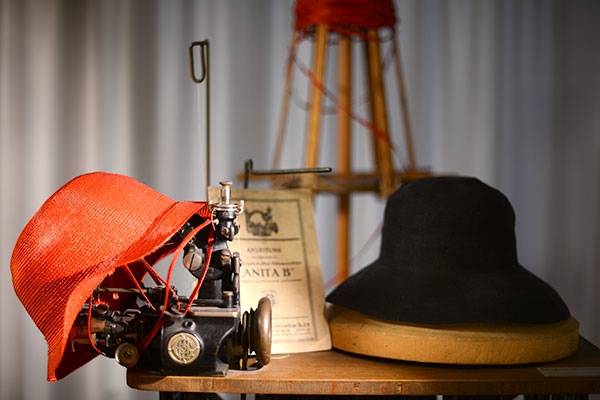 CAPELINE


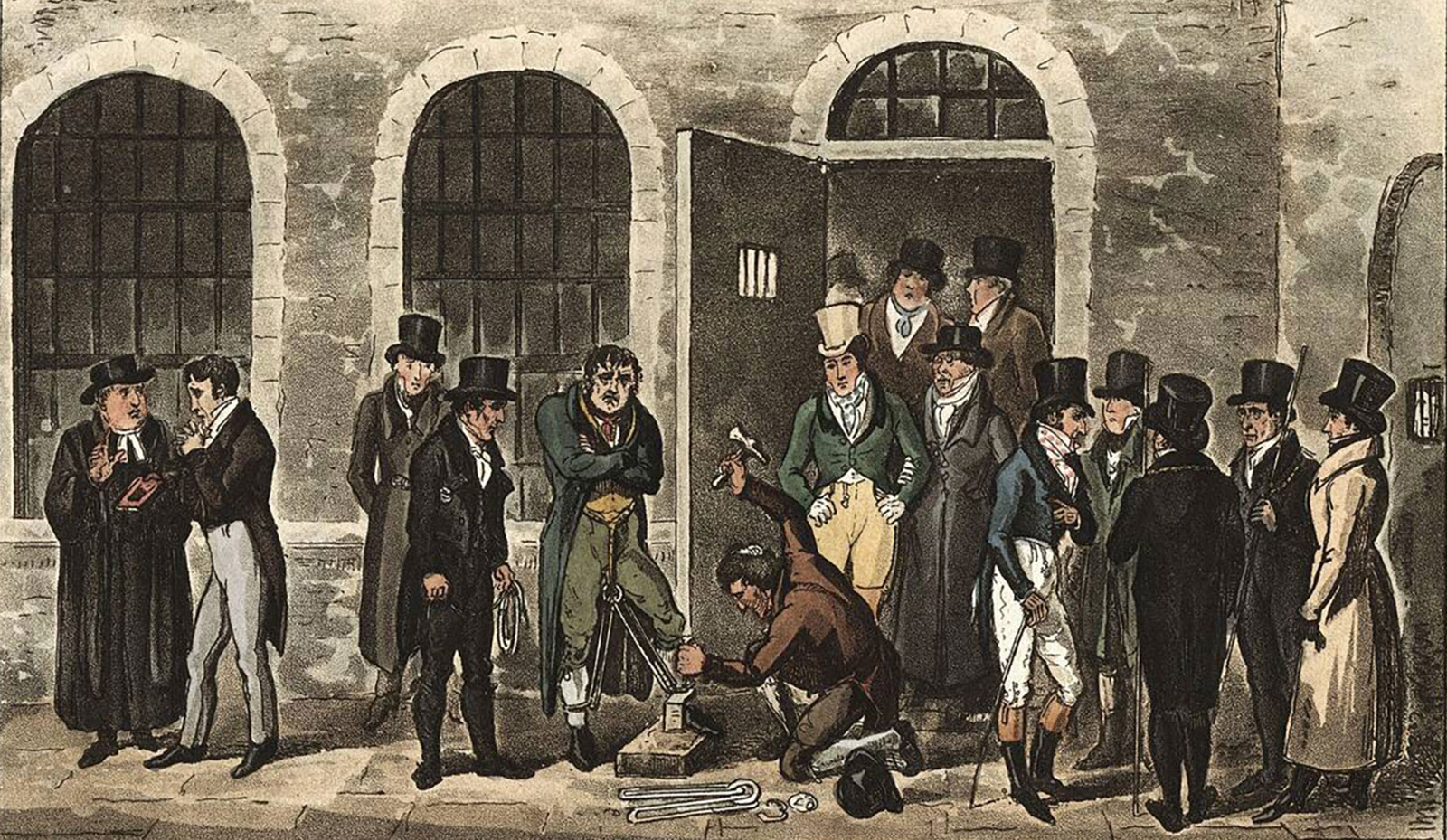


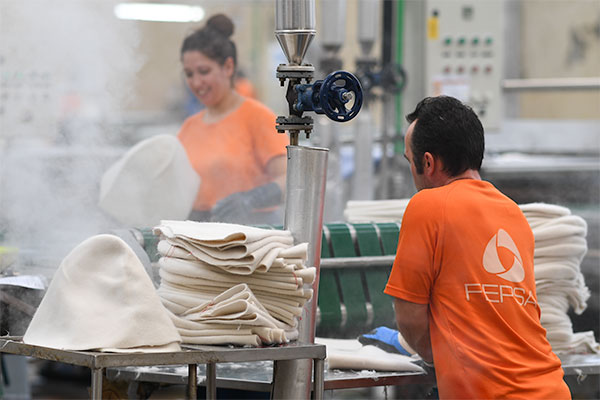 The second stage is the actual felting process which uses steam and pressure to bind the wool fibres together, then the felt is rolled to consolidate and continue the felting process, the last act is carried out by a bumping machine to finally consolidate the fibres in the wool, although this machine is not always used.